Bands of Theseus - thoughts on bands with many lineup changes
[30-03-2026]
Something I am obsessed with are the timeline charts of band lineups that Wikipedia has, and as a result, I have become fascinated with the question of what makes a band's continuous existence be perceived as authentic and coherent. I like bands with long and complicated histories and developments. Changes in style, changes in lineup. I find it fascinating and I enjoy exploring it, understanding the gradual changes, the sudden shifts, and unraveling the shared sense of identity, what connects them, what separates them.
This is not attempting to be a list of the longest band member lists and most convoluted member timeline charts. What I am attempting to do here is merely lay out a couple of thoughts and observations I have made looking at many of these charts.
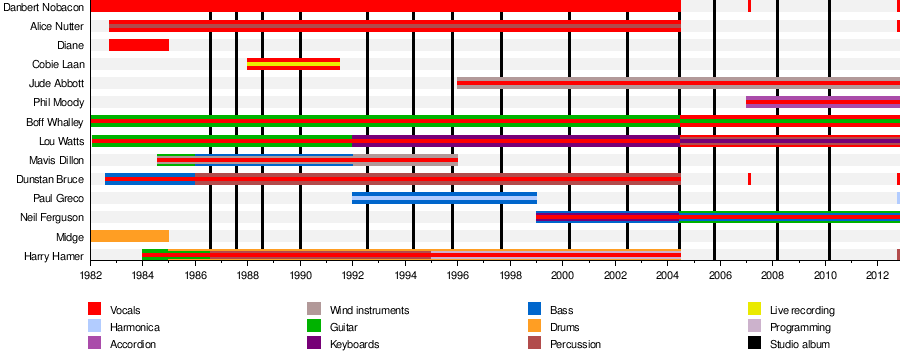
For example, looking at Chumbawamba, the most noticeable thing here is that about half the members leave all at once in 2004. Out of context I would assume a huge falling out, some sort of schism on the creative direction that split the band apart. But being very familiar with the band, I know that this was one half of the band retiring on good terms to step away from full-time band business, and the remaining half shifting focus onto folk, a style of music that has been an important influence on them since the very beginning. The retired members even returned for the band's ultimate retirement, the farewell show in Leeds in 2013. So despite half the members missing and the sound of the band going through a noticeable change, I know how the two sides of the band's history connect and what motivated this move.
A difficult move for bands to go through is always to switch singers, with the identity of the band often directly tied to the voice and/or face of their frontperson. There are a number of prominent cases in the history of rock music where such a change has been accepted, Iron Maiden, AC/DC, Van Halen, but it's all too common for at least casual fans of a band to lose interest once the voice has changed. In recent memory, the most prominent case of this that I can think of is Linkin Park. The reformation of the band with Emily Armstrong to replace the widely beloved Chester Bennington was extremely controversial, for several reasons, but also, because to many fans, their love of Linkin Park was tied up directly with their fondness of Bennington. How can I suddenly accept a band that I've come to love with a specific face for so long with someone different to take their place?
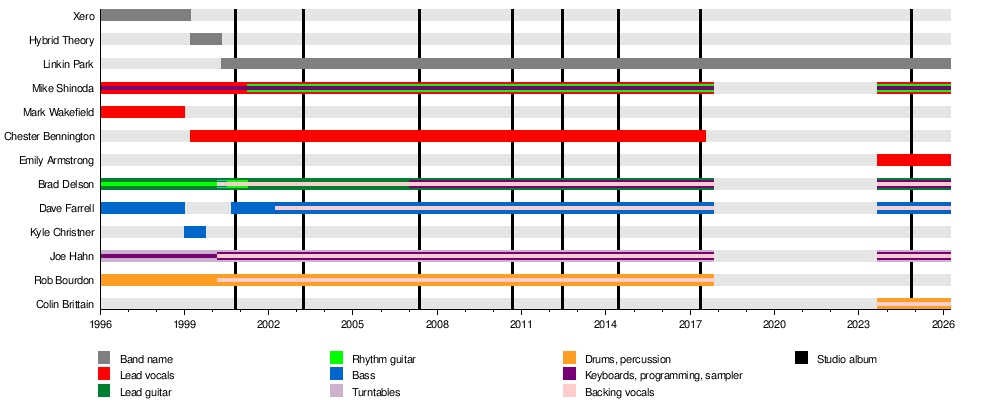
In my eyes, Linkin Park have, through the reformation, maintained their band identity. While it is obvious that Armstrong is a different singer than Bennington, Armstrong's vocal style and pitch is a well enough fit into the pre-existing Linkin Park sound that she is able to integrate into the band and create a similar feeling to what Bennington did. And what I think is most relevant here is that the band has had a very consistent lineup over the years, the core remaining band is still largely the same and the band remains with a recognizable style in songwriting and arrangements. Linkin Park are a very special band that despite radical changes in sound over the years have maintained a recognizable handwriting in their melodies and arrangements, and continue to do so with the new singer.
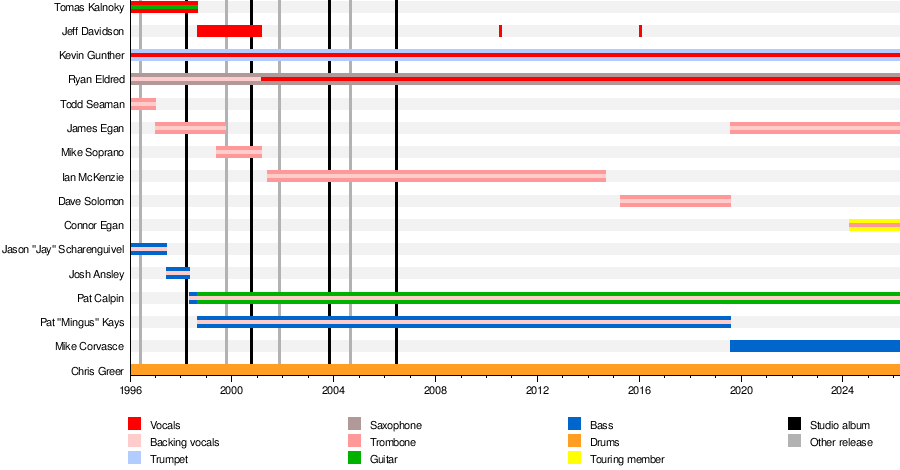
Now, despite their divisive status, Linkin Park are still massive, so let's look at a different example: Ska punk band Catch 22 have recorded one of the most iconic ska punk albums of the peak third wave, Keasbey Nights, with singer, guitarist and songwriter, Tomas Kalnoky. After he left, the band continued, first with replacement vocalist Jeff Davidson, and then with trombonist and saxophonist Ryan Eldred and Kevin Gunther splitting lead vocal duties, but they would forever live in the shadow of the Kalnoky era. The iconic status of Keasbey Nights and the fact that Kalnoky would go on to form the much more popular Streetlight Manifesto meant that Catch 22 would always just be reduced to Keasbey Nights, an album that they had less and less to do with anymore, while the music they released post-Kalnoky is largely ignored. To add insult to injury, one of Streetlight Manifesto's biggest songs, A Moment of Silence, features the verse "Don't forget, I connect and I heard every word you said / Like a child who believes he was wronged / If you hate me so much then stop singing my songs". Kalnoky even went so far as to re-record Keasbey Nights with his new band. Although fans generally seem to be split about which version of the album they like more, the damage for Catch 22 is undeniable, because now, people don't even really seem to know anymore if the one thing they are famous for is even theirs.
It is no secret that I am a massive fan of Kalnoky's work, Streetlight Manifesto being one of my all time favourite bands. Still though, I think Catch 22 deserved better than that. Their post-Kalnoky albums are still very solid, although they are much more hit-or-miss for me. The highs are still very high, but they also have an equivalent amount of misses, just never reaching the consistency of perfection that Kalnoky does. But it's a good band that's very much worth listening to that has a unique sound in its own right. But do I feel like the Kalnoky years and the post-Kalnoky years are connected? No, not really. I can look past the different voice singing the songs, but the style in songwriting is just too different. I like and respect post-Kalnoky Catch 22, but I recognize it's not the same. To me, Keasbey Nights is a Kalnoky album, and Catch 22 is not Kalnoky's band.
Generally speaking though, I like singer swaps, or at least, I find them interesting. Even if they don't work out to my liking, finding out a band has changed lead singers is always something that draws me in when learning about a band. Losing a lead singer is the most difficult change a band can go through for their identity and public image, and continuing besides that is to me always a sign of a group of artists with a strong artistic vision or a strong sense of comradery.
On the flipside, there are bands that almost no one ever even thinks about when this topic comes up: Bands whose members are constantly swapped out, but no one notices because the singer is still the same. This is not necessarily a bad thing, but I want to do want to point to the relative ease with which a lead singer may be able to replace the entire lineup without anyone batting an eye, versus bands often having to fight an uphill battle their entire remaining career if they split with their original singer.
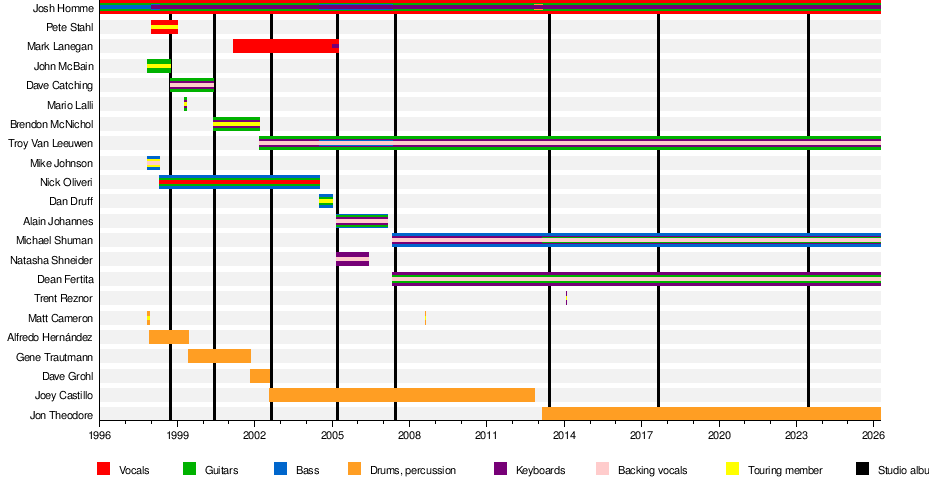
Queens of the Stone Age to me are a classic example of a well respected, consistently good band, that is kind of more of a solo project. Formed and fronted by former Kyuss guitarist Josh Homme, this band recorded many classic, widely beloved albums, all with a completely different lineup. Different members contributed creatively, for example bassist Nick Oliveri and second singer Mark Lanagan both wrote songs along with occasional lead vocal duties, so it's not a case where the lead singer dictates the entire creative direction of the band. Nonetheless, the lineup changes this band went through were very frequent, and the band has many different albums that fans point to as their best, yet I rarely ever heard anyone even mention any lineup changes, let alone voice an opinion on them. Josh Homme is there, so it's all good.
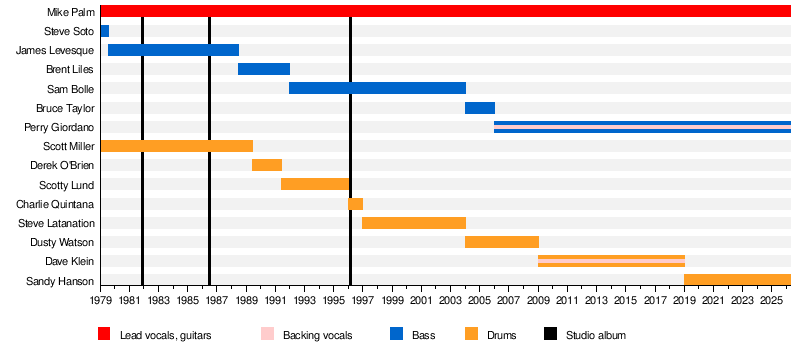
Agent Orange, on the other hand, recorded two albums in the 80s, and then, for all I knew, disappeared, never to be seen again. I was shocked to find out that they never broke up and continue to this day, even though I have never seen tour announcements from this band or even heard anyone mention them in the present tense. Looking into the band's history though, the known lineup left in the late 80s, most importantly bassist and songwriter James Levesque. The band continued with an inconsistent lineup around frontman Mike Palm and even released another album in 1996. I sought it out, and thought it was terrible. But it doesn't matter, cause it doesn't seem like anyone had heard it anyways. But why can a band continue in zombie mode like that and the only claim to the name is that the one guy people happen to notice stuck around? I can't speak on behalf of the musicians involved in the history of the band, but to me, the impression I get is this is just Palm milking the name of his iconic band.
A more notorious negative example are The Clash, who split with key members guitarist Mick Jones and drummer Topper Headon, recorded an unlistenable trash fire of an album, and split. I suppose the hope here was that with Joe Strummer in front, people wouldn't notice, but the album was just too obviously terrible for people not to.
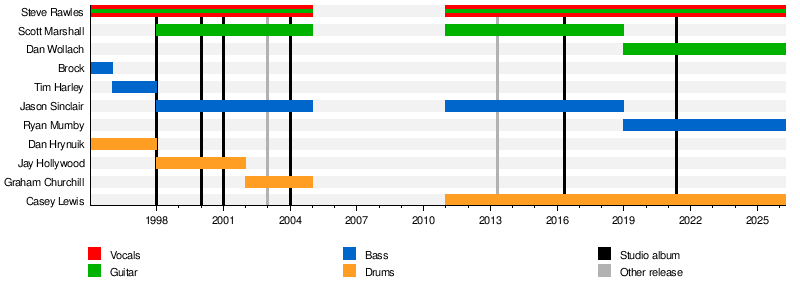
An edge case, to me, are Canadian technical skate punks Belvedere. They rose to prominence with a run from the mid 90s to the mid 2000s with a consistent lineup of singer Steve Rawles, guitarist Scott Marshall and bassist Jason Sinclair. Just halfway through, they switched drummers, but the lineup otherwise seemed stable. The band broke up in 2005, to reunite again in 2011, once again, with a new drummer, but otherwise same lineup. However, in 2019, Marshall and Sinclair both leave, but this time, drummer Casey Lewis stays. The sudden, simultaneous replacement of two non-singer core members screams solo project in disguise to me. However, the fact that Lewis stayed makes me wonder: Is the new core lineup Rawles and Lewis? Are they what defines Belvedere post-reunion, and not the original members from before?
I don't mythologize "founding members" or "classic lineups" or anything like that. The whole reason this interests me is because I am curious about how bands evolve. I consider bands to be a social bond of several artists, and when suddenly that entire social bond is swapped out, the old social bond is gone and a new one exists. Even if the new one exists in the place of the old one, it's a new bond, the old one doesn't exist anymore. But a social bond can survive individuals leaving and new ones joining, so that over time, the group that makes up that bond changes, but that doesn't mean it is completely replaced from one moment to another. This means that I can accept bands that, over a longer time period, switch out every single individual member, if, in the meantime, a remaining consistent part of the group can establish itself as a coherent social bond. Or, to make a much sillier comparison to explain what I mean: Imagine the bars from the Wikipedia charts are wooden boards that are glued together. Would the construction fall apart, or is there enough overlap to have structural integrity?

I am willing to accept that Belvedere had enough overlap between the "old-school" lineup with Marshall and Sinclair and the "new-school" lineup with Lewis for the social bond to have gradually shifted from Rawles+Marshall+Sinclair to Rawles+Lewis as the core of the band. That being said, multiple core members leaving at the same time always feels fishy. But I'll give them the benefit of the doubt as long as the music is good.
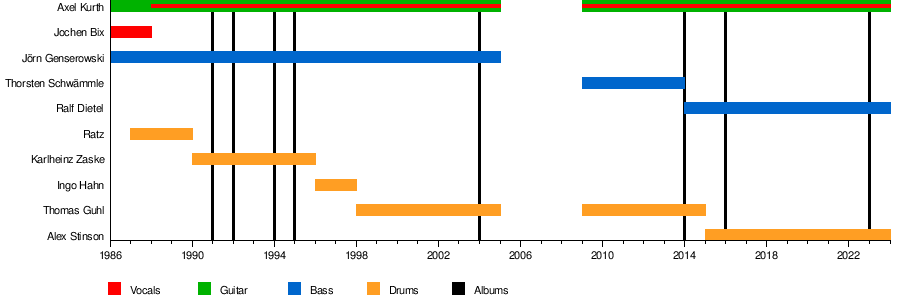
A band that I feel less charitable about their lineup changes, even though it's a very similar development to Belvedere, are the German trio Wizo, and here, the reason is very simple: I am just very attached to Karlheinz Zaske's drumming. His double-bass pedal metal influenced style and his odd sensibilities for breaking up straight forward beats was a very unique approach for the band's whimsical, melodic punk sound and without it I feel like something's missing. I know I may sound like I'm trying to establish a universal theory of which lineup changes are valid, but it's all still very subjective. You may disagree with any of my prior examples. If one very specific contribution by one person to a band is what makes the difference for you, I won't argue with you. Wizo to me are still good, but they're not special anymore. If their music still sounded as unique to me as their 90s output, I might be more willing to accept the gradual lineup changes.
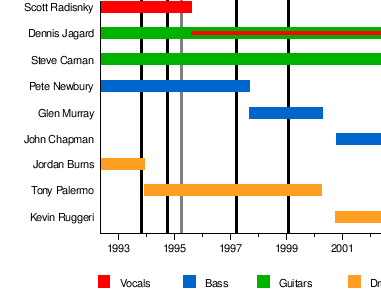
Another interesting example is the band Ten Foot Pole, because they are a singer-swap-band that became a solo-project-in-disguise-band. TFP recorded two albums with singer Scott Radinsky, 1994's Rev widely being considered a skate punk classic. Radinsky then left to pursue his professional baseball career full-time (and form another band Pulley without ambitions of being a full-time touring band), and founding member and guitarist Dennis Jagard took over the vocal duties. Given the high status of Rev, and Radinsky's very distinctive voice, to many, the band lost a lot of its credibility in the post-Radinsky era. A quite similar situation to Catch 22 the way I understand it, though Ten Foot Pole and Radinsky didn't have animosity between each other. I don't consider this a break in the band identity, though. Jagard has been with the band for over 10 years by that point, which means the lineup barely changed after Radinsky left, even though the sound is different on the surface. On top of that, Rev's 1997 follow-up Unleashed with Jagard on vocals is an excellent album, easily tied with Rev for the band's finest work. For a while, the lineup stayed relatively consistent, but eventually, more and more members of the original lineup broke off.
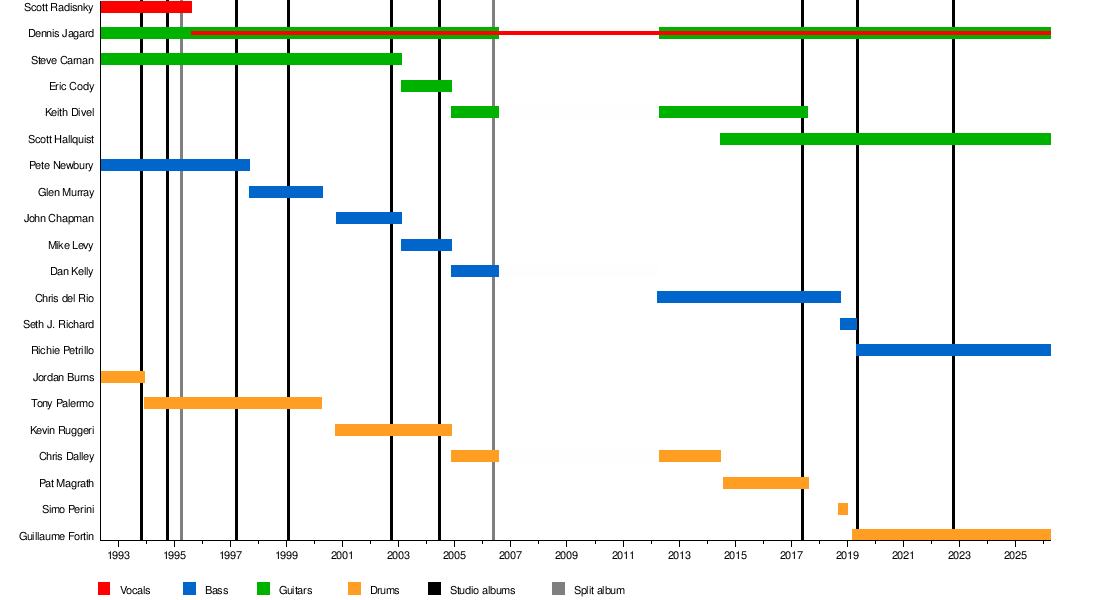
Today, Ten Foot Pole still exist with Jagard as singer, but virtually every other member of the band is replaced every other year. Rev to Unleashed might seem like a bigger change at first glance, but since the 2000s, every release by the band has had a completely different lineup to the previous, the band coherence only crudely taped together by Jagard as the frontman. I don't think this has structural integrity. It's gonna break off!
Solo project-bands of course don't have to be centered around the singer. The obvious examples are bands like Van Halen, that are named after the guitarist and drummer, or even Axel Rudi Pell, which is a literal, official solo project, but where the solo musician is the guitarist. Obviously, neither of these are "in disguise", and ironically, both of them had more consistent lineups than most of the bands that I've mentioned so far. But, let's get to a really weird case:
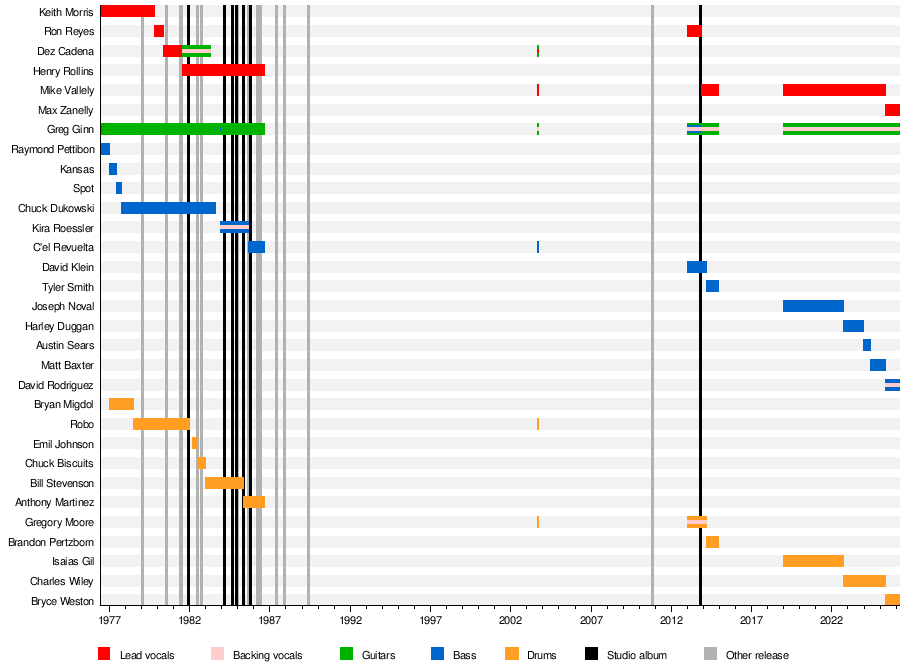
In my opinion, the most absurd case of a solo project in disguise in punk is Black Flag. But here, the solo lead is not the singer. Even the part of Black Flag everyone remembers, the first two albums Damaged and My War with Henry Rollins on vocals, is far from anything resembling a "classic" lineup - Rollins was already their 4th singer and many classic songs had been recorded way before he arrived on the scene. Although, during that time, there was still some amount of plausible deniability - the lineups shifted around and were replaced gradually - this band was messy. The only constant is guitarist and notoriously difficult personality, Greg Ginn, everyone was replaceable, and replace them he did. After a 10 year run of constant flux, the band broke apart in 1986. This alone would be a pretty tumultuous story, but since the 2010s, Ginn frequently revived the band with completely incoherent lineups, seemingly swapping in and out members on a whim, including firing their at-the-time singer Ron Reyes and replacing him with band manager Mike Vallely mid-fucking-show. This reached a peak in April 2025, when a new lineup of Black Flag was announced, with three new members all at once, no mention of the previous lineup. The catch: They were three completely unknown musicians who were no older than in their early 20s. This makes even their combined age younger than the 70 year old Ginn. And Max Zanelly, the first female vocalist in the band's history, reportedly has had no prior experience as a vocalist and was picked out by Ginn because he liked her vibe when she shouted along to Black Flag songs from the crowd at a live show. Whoof.
In a vacuum, it could be cool that one of the biggest names in the history of punk is passing the torch to a new generation of punks. But given Ginn's constant sinister presence in the trainwreck of a history of this band and his terrible reputation as a person, I really just hope nothing horrible happens here. I think the coolest possible outcome from this would be if Ginn eventually retired (please fucking retire already) and the three new members get to keep the band. Black Flag fully revived for a new generation and ready keep going another 30 years. Would this be ridiculous and by any sane metric a completely new band that has nothing to do with the original Black Flag? Yes, absolutely. But I want to see it happen regardless. The funniest outcome would be if the new members get sick of working with Ginn and start a new off-shoot band on their own to play Black Flag songs, just like the band Flag, which consists of other former Black Flag members that also got sick of working with Ginn. Can you imagine? We could be looking at the beginnings of a whole industry of parallel universe versions of Black Flag that all have an equally or even more legitimate connection to the original strand of Black Flag than Black Flag itself.
Back to topic. Do you know what else is fucked up?
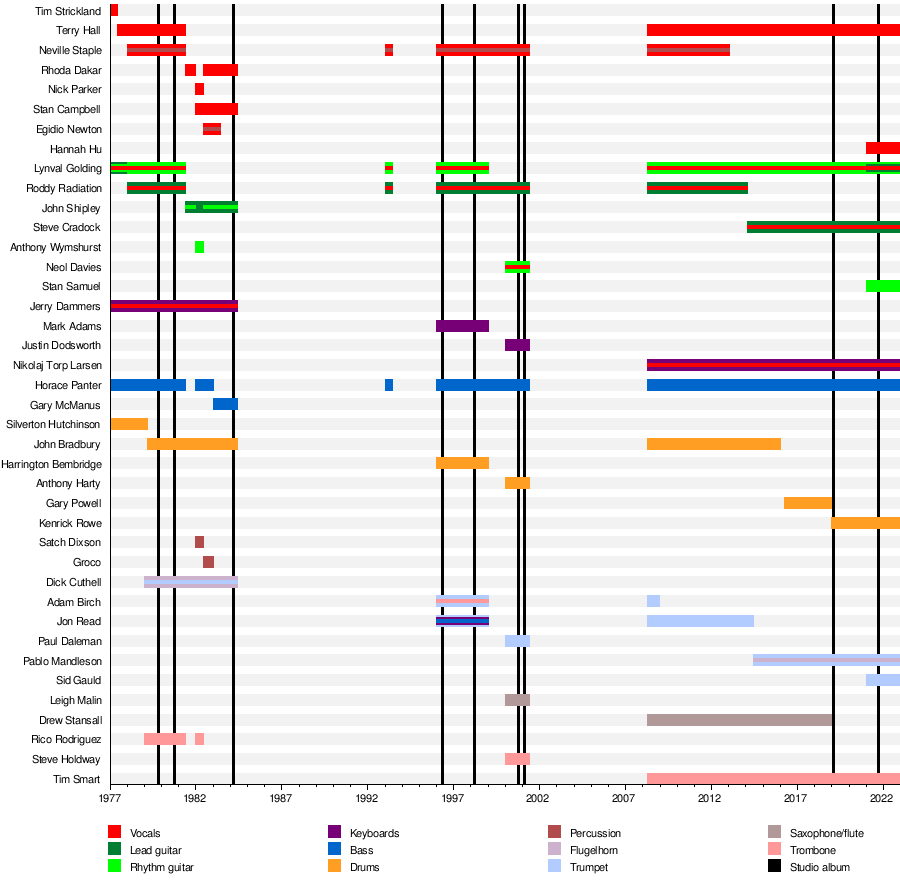
You ever seen the fucking Specials' member timeline? Yeah I don't know what the fuck is going on here. There are bands with longer members lists than The Specials, such as the Dexys (Midnight Runners), but they are more of a solo project and members come and go. What I find interesting about The Specials is that there is no identifiable core and the lineup is in constant flux, shifting around, but somehow always recognizable. It's like there's a pool of 20 or so musicians that might make up The Specials and they exit and enter at random. Picking out a Specials release or a live show from a random year, you'll have no idea who's gonna be on there. But you can be pretty sure it's probably at least one or two you'll recognize. It's so chaotic I almost can't help but respect it. Given the history of the band, I was honestly quite surprised that the passing of Terry Hall ended up causing the band to ultimately call it quits, when he hasn't even been with the band for a major part of their career. But I suppose that after continuing through a history as chaotic as The Specials', the tragedy of the death of a major contributor is a good reason to finally put the band to rest after so long. Or maybe they'll reunite in a few years, who knows.
Something I have noticed of myself is that I tend to be more interested in singer-swap bands than band-swap singers, and I suppose that bias came through in this post. I don't want to make any definitive judgement call thoughs, this is always a personal decision, for the musicians involved and for the fans. I think the reason I ended up this defensive about singer-swaps is because for once, it tickles the band history and band completionist autism in my head, and also because I notice the difference in how singer-swap bands are often being discussed versus how band-swap singers are being discussed, and it just leads me to overcorrect. So take from this what you will